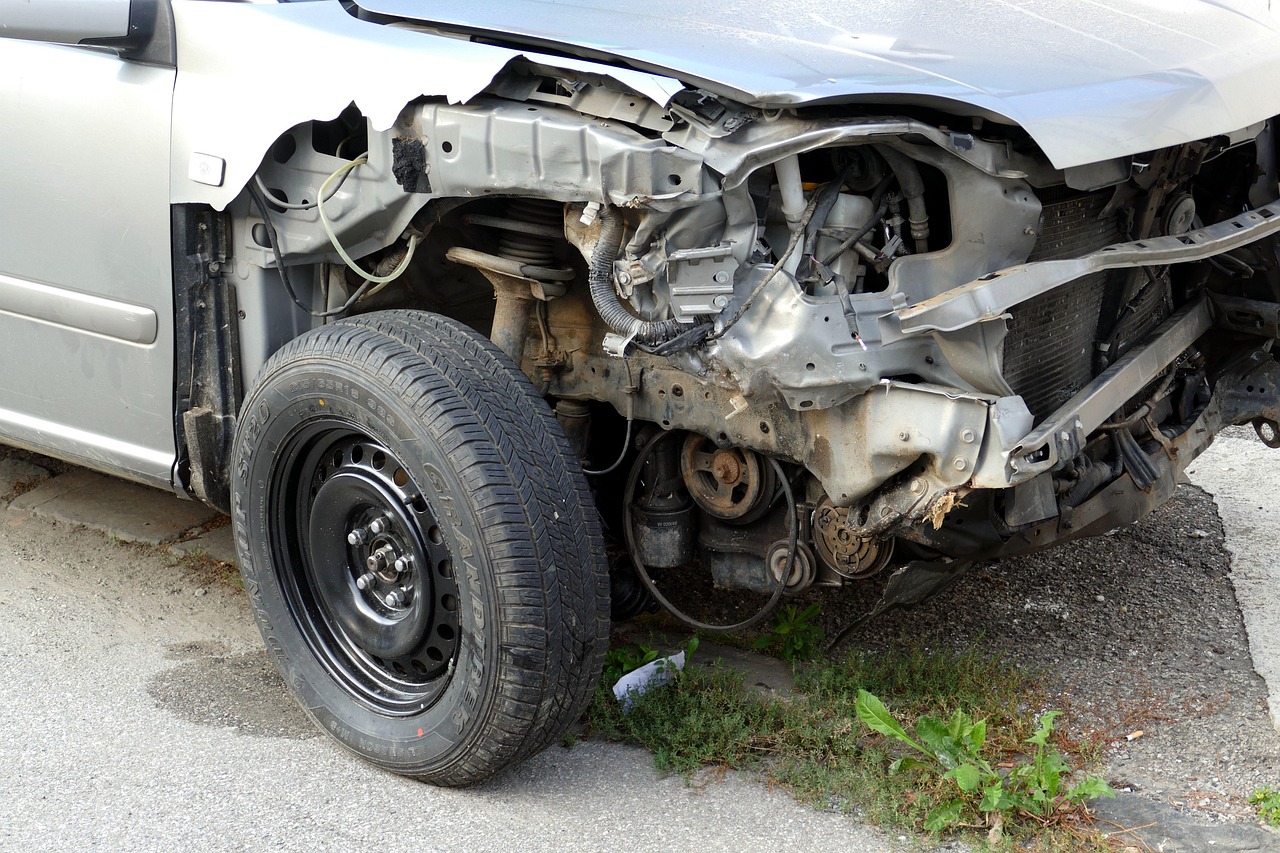
Usually not. Compensation for injuries from a car accident, including medical bills, pain and suffering, and lost wages that result from the injury, is excluded from federal income tax under Section 104(a)(2) of the Internal Revenue Code. Payment for damage to your car is generally not taxable either, as long as it is not more than your adjusted basis in the vehicle, which is normally what you paid for it. The taxable parts are punitive damages, interest, and any amount that reimburses medical expenses you already deducted in an earlier year. Emotional distress is only tax-free if it comes from a physical injury.
How each part of a car accident settlement is taxed
| Part of the settlement | Taxable? | Why |
|---|---|---|
| Medical bills, past and future | No | Damages for a physical injury, unless you deducted them in an earlier year |
| Pain and suffering | No | Damages for a physical injury |
| Lost wages caused by the injury | No | They flow from the physical injury, so they are excluded like the rest |
| Emotional distress or anxiety from your injuries | No | Treated as part of the physical injury |
| Emotional distress with no physical injury | Yes | The tax code says emotional distress alone is not a physical injury |
| Vehicle repair or replacement, diminished value | Usually no | Not income up to your adjusted basis; you reduce your basis instead |
| Rental car reimbursement | No | Repays an expense you had |
| Punitive damages | Yes | Always taxable, with one narrow wrongful death exception |
| Prejudgment or post-judgment interest | Yes | Taxed as interest income |
IRS Publication 4345 sets out these rules. The general principles, and how to treat a settlement that covers several kinds of claims, are in our guide to taxes on a settlement check.
What a typical car accident claim pays
Most car accident settlements are paid by the at-fault driver’s liability insurer. Insurance industry data from ISO, published by the Insurance Information Institute, shows how the average paid claim has grown:
| Year | Average bodily injury claim | Average property damage claim |
|---|---|---|
| 2015 | $17,014 | $3,628 |
| 2018 | $18,213 | $4,174 |
| 2020 | $20,769 | $4,703 |
| 2022 | $24,681 | $6,024 |
| 2023 | $26,178 | $6,554 |
| 2024 | $28,278 | $6,770 |
That is a 66% increase in the average bodily injury claim and an 87% increase in the average property damage claim in nine years. The figures include loss adjustment expenses and exclude Massachusetts and most no-fault states, so treat them as a guide rather than a prediction for any single case. For a typical claim, though, the tax answer is simple: an average bodily injury payment of around $28,000 with no punitive damages or interest would be entirely tax-free.
A worked example
Suppose you settle a car accident claim for $60,000. The release allocates the money as follows, and you bought your car for $22,000 a few years ago.
| Component | Amount | Taxable amount |
|---|---|---|
| Medical expenses | $14,000 | $0 |
| Pain and suffering | $28,000 | $0 |
| Lost wages during recovery | $8,000 | $0 |
| Vehicle (actual cash value) | $7,000 | $0, because it is less than your $22,000 basis |
| Interest | $3,000 | $3,000 |
| Total | $60,000 | $3,000 |
Only the interest is taxable. There is one twist: if you itemized and deducted $4,000 of accident-related medical bills on last year’s return and it reduced your tax, $4,000 of the medical portion becomes taxable this year. That is the tax benefit rule, and it stops the same expense from being both deducted and reimbursed tax-free.
Why the car payment is almost never taxable
Payments for property damage are compared with your adjusted basis, which is generally what you paid for the car plus improvements. Only an amount above basis is a gain. Cars lose value quickly and insurers pay actual cash value, so the payout is nearly always below what you paid.
- If the car is repaired, you reduce your basis by the settlement and add back what you spend on repairs.
- If the car is totaled, the insurer’s payment is compared with your basis. A payment below basis produces a loss, but a personal casualty loss on a car is generally not deductible unless it happened in a federally declared disaster.
- Diminished value claims compensate you for a loss in market value and follow the same basis rule.
- Business vehicles are different. If you depreciated the car for business use, your basis is lower and part of the payment may be a taxable gain.
When part of the settlement is taxable
Punitive damages
Punitive damages are taxable even when they are paid in a physical injury case, for example where a drunk driver caused the crash. The only exception is a wrongful death action in a state whose law, as of September 13, 1995, allowed only punitive damages in those cases. Alabama is the usual example.
Interest
Interest added to a judgment or a delayed settlement is interest income. Ask for it to be shown separately so the tax-free part of the award is not mixed with it.
Emotional distress without a physical injury
If you were in an accident but were not physically hurt, or you are a family member who witnessed an injury, payments for emotional distress are taxable. You can reduce the taxable amount by medical costs for treating the distress that you have not already deducted.
Lost wages that are not tied to an injury
Lost wages are only tax-free because they flow from a physical injury. Time off work for a claim that involved no injury, such as a property-only accident, does not get the same treatment.
Will you get a 1099?
Normally not for the injury portion. Payers do not report damages for physical injury or physical sickness on Form 1099-MISC, apart from punitive damages. You may receive a 1099-INT or a 1099-MISC for interest or punitive damages. Your attorney may receive a 1099-MISC for the gross proceeds paid to their trust account, which is a reporting requirement for the payer and does not make the settlement taxable to you.
Lawsuits, attorney fees and timing
Car crashes account for a large share of injury litigation. In the Bureau of Justice Statistics’ study of state courts, nearly 60% of tort trials involved automobile accidents, yet only about 4% of tort cases reached a trial at all. Most claims settle, and the release is where the tax split is decided.
- Attorney fees: in a physical injury case the whole recovery is excluded, so the fee, often around a third of the settlement, does not create a tax problem. That is very different from non-injury cases, where you can be taxed on the lawyer’s share.
- Structured settlements: periodic payments for a physical injury are tax-free in full. If you take a lump sum and invest it, the investment earnings are taxable.
- Accidents at work: if you were driving for your job, you may also have a workers’ comp claim, which is tax-free under a separate rule. See whether workers’ comp settlements are taxable, including the Social Security disability catch.
Checklist before you sign the release
- Make sure the release states that the payment is for personal physical injuries and how it is split among injury, property and interest.
- Ask for punitive damages and interest to be listed separately.
- Keep your medical records and the police report with your tax papers.
- Check last year’s return for any accident medical bills you deducted.
- Find your purchase paperwork for the car so you can show your basis.
- Set aside tax on any interest or punitive damages.
If your settlement includes punitive damages, a business vehicle or a mix of claims, a tax accountant can review the allocation before you sign.